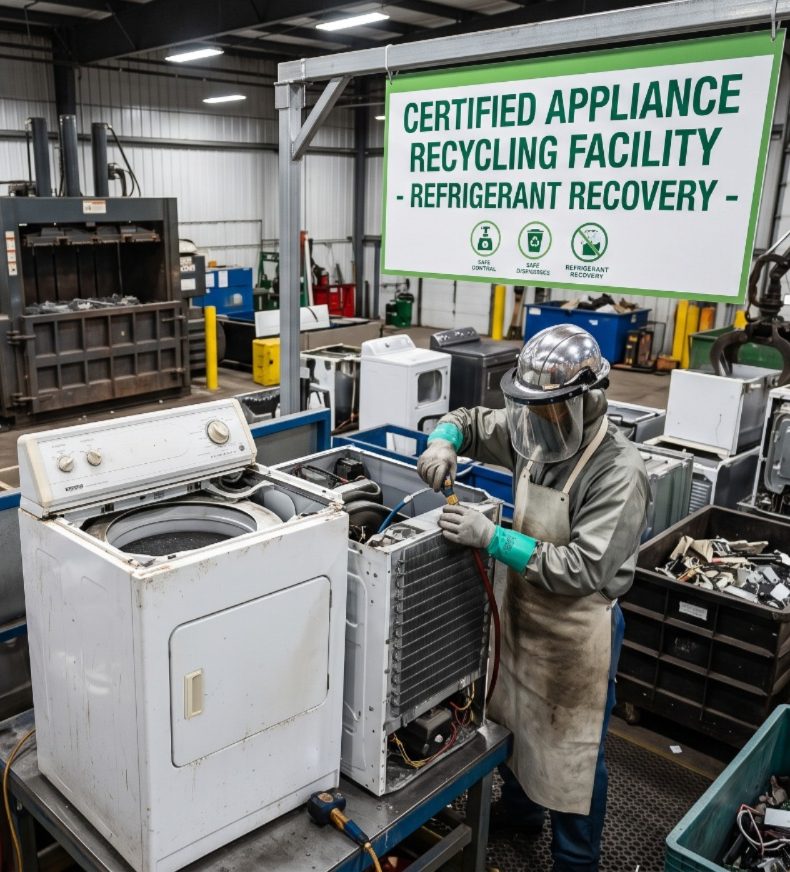
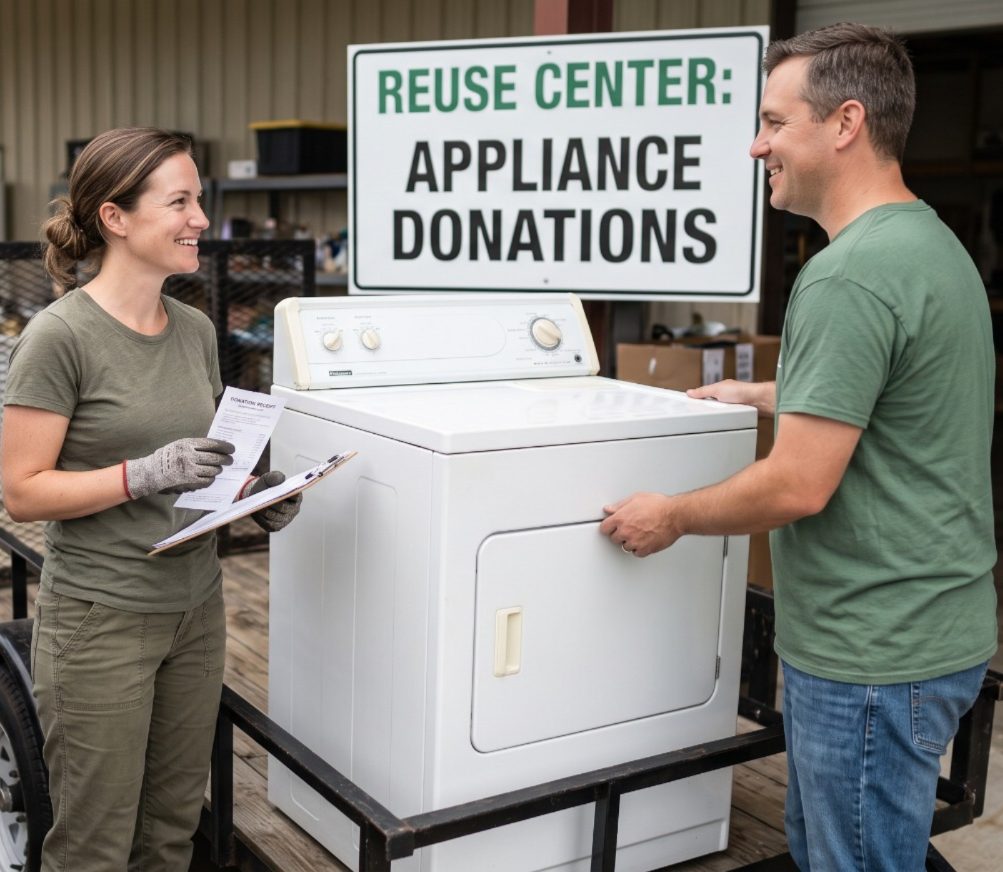
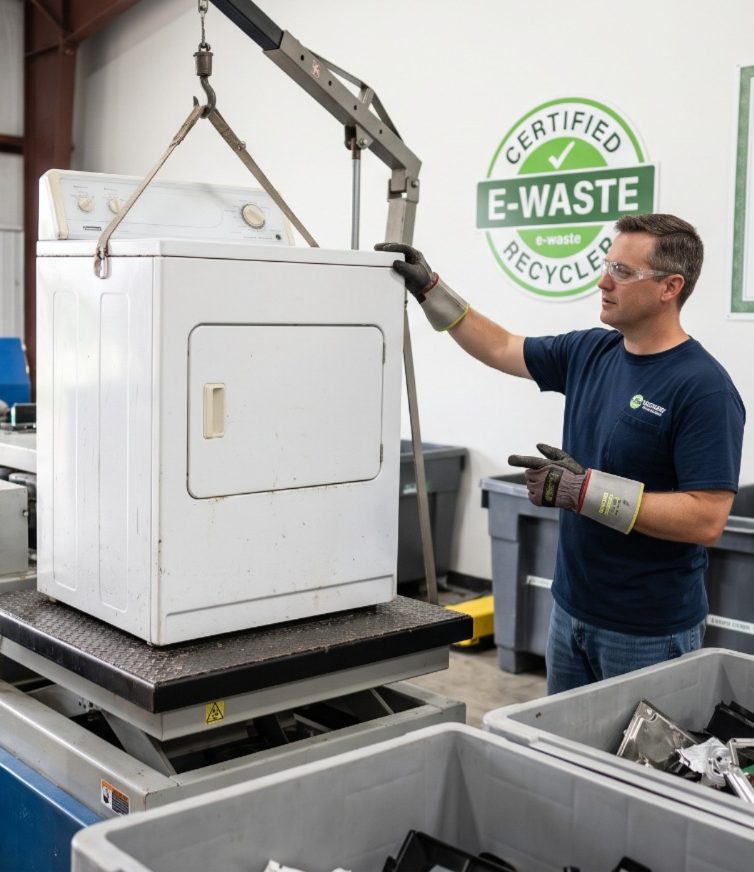
That dead refrigerator in the garage or the washer that finally gave out isn't just clutter, it's an item California law treats as hazardous waste the moment it leaves your home the wrong way. Refrigerators, freezers, and window air conditioners hold Freon (refrigerant), older units may contain mercury switches or PCBs, and most major appliances are considered e-waste or universal waste under state rules. That means you can't just drag a fridge to the curb and hope for the best.
The good news: if you're wondering how to get rid of old appliances the right way, it's straightforward once you know your options. This guide walks through every method, donation, retailer take-back, utility rebate programs, scrap recycling, and professional appliance removal, so you can pick the one that fits your appliance, your timeline, and your budget.
Why You Can't Just Throw Away an Old Appliance
Major appliances, often called "white goods," fall under special disposal rules for a few reasons:
- ✔Refrigerants (Freon). Refrigerators, freezers, window units, and some dehumidifiers use refrigerants like R-134a or older R-22. Under the federal Clean Air Act (EPA Section 608), refrigerant must be professionally recovered before the appliance is scrapped, it cannot legally be vented or crushed with the gas still inside.
- ✔Universal waste rules. California's Universal Waste Rule, enforced by the Department of Toxic Substances Control (DTSC), classifies many appliances and their components (batteries, mercury switches, circuit boards) as universal waste, which has its own handling and transport requirements.
- ✔Local hauler restrictions. In Laguna Woods Village, CR&R Environmental Services handles the weekly cart pickup and the free third-Saturday bulky item day, but large appliances, especially anything with Freon, are often excluded or limited to a set number of items per pickup.
- ✔Landfill diversion goals. Cities and counties across Orange County have landfill diversion targets, so most jurisdictions require appliances to go through certified recycling rather than general trash.
Skipping these steps can mean a missed pickup, a fine, or refrigerant releasing into the atmosphere, which is why "how do I get rid of this fridge" is rarely a curb-and-forget question.
Your 6 Main Options for Getting Rid of an Old Appliance
| Method | Best For | Typical Cost | Speed |
|---|---|---|---|
| Donate (still working) | Fridges, washers, dryers, stoves in good condition | Free (tax-deductible) | Days to a few weeks |
| Retailer/manufacturer haul-away | Buying a replacement appliance | Often free with delivery | Same day as new delivery |
| Utility recycling rebate | Old, working refrigerators & freezers | Free + cash rebate | 1–3 weeks scheduling |
| Municipal bulky item pickup | A single item, no rush | Free (limits apply) | Monthly / scheduled |
| Scrap metal recycler | Non-working appliances, DIY haulers | Free or small payout | Same day (if self-hauled) |
| Professional appliance removal | Broken, multiple, or heavy appliances; no time to haul | Flat-rate fee | Same-day or next-day |
1. Donate a Working Appliance
If your refrigerator, washer, dryer, dishwasher, or stove still runs, donation keeps it out of the waste stream entirely and can be a tax write-off. Organizations like Goodwill Southern California, The Salvation Army, and Habitat for Humanity ReStore accept working major appliances, though many require the unit to be less than 10 years old and in clean, functional condition. Pickup scheduling can take one to three weeks, so this works best when you're not in a rush.
2. Let the Retailer Haul It Away
When you buy a new refrigerator, washer, or range from a big-box retailer, ask about haul-away service. Many retailers will remove your old unit for free or a small fee at the same time they deliver the new one, and some (like appliance and electronics retailers with take-back programs) route the old unit to certified recyclers. This is one of the most convenient options if you're already replacing the appliance.
3. Use a Utility Recycling & Rebate Program
Southern California Edison (SCE) and other California utilities periodically run appliance recycling programs that pick up an old, working refrigerator or freezer for free and pay a cash incentive, since removing an inefficient unit reduces energy demand. SoCalGas and other providers sometimes offer similar programs for gas appliances. Availability and rebate amounts change, so check current program terms before scheduling.
4. Municipal or HOA Bulky Item Pickup
If you live in Laguna Woods Village, CR&R's scheduled bulky pickup can take some appliances, but rules vary by mutual, and Freon-containing units often require separate arrangements. If you're not sure what your specific building or mutual allows, our Village trash & recycling resources break down the gate, chute, and enclosure rules by community.
5. Take It to a Scrap Metal Recycler
Non-working appliances are mostly steel, aluminum, and copper, which scrap yards will often accept for free or a small payout once refrigerant has been properly recovered. This route requires you to remove and transport the appliance yourself, which isn't practical for a heavy refrigerator or a stacked washer/dryer unit, especially without a truck or dolly.
6. Hire a Professional Appliance Removal Service
For broken appliances, multiple units at once, or anything too heavy to move safely, a professional appliance removal and recycling service is the fastest, lowest-effort option. A licensed crew handles the heavy lifting, transports the unit legally (refrigerant included), and routes it to the correct recycler, no dollies, no truck rental, and no risk to your back or your floors.
This is exactly what we do at LW Garbage Disposal. We haul away refrigerators, freezers, washers, dryers, dishwashers, and ranges throughout Laguna Woods Village and South Orange County, with Freon-containing units handled and recycled the right way. Most jobs are same-day or next-day, with an upfront flat-rate quote before we lift a finger. See our full appliance removal service page for details, or call us directly at (949) 849-0548.
How to Prepare an Appliance for Removal
A little prep keeps the pickup fast and damage-free:
- ✔Empty and unplug it. Clear out the fridge or freezer, defrost if needed, and disconnect power at least a day ahead.
- ✔Disconnect water and gas lines. Washers, dishwashers, and gas ranges need lines shut off and detached before a crew can move them safely.
- ✔Secure doors. Tape refrigerator and freezer doors shut to prevent them from swinging open during transport.
- ✔Clear a path. Make sure hallways, doorways, and any stairs are clear so the crew can move the unit without scuffing walls or floors.
- ✔Note the type of unit. Let your removal service know if the appliance contains refrigerant (fridge, freezer, window AC) so it can be handled under the correct recycling process.
What About the Refrigerant? (Freon-Containing Appliances)
Refrigerators, freezers, and window air conditioners need their refrigerant professionally recovered before the metal shell can be recycled or scrapped. This isn't optional; venting refrigerant is a federal Clean Air Act violation, and most recyclers and scrap yards will legally refuse a Freon appliance that hasn't been certified as recovered. When you book with a licensed appliance removal company, this step is built into the process, one more reason a fridge or freezer is usually better handled by professionals than hauled to the curb.
What Does Appliance Disposal Cost?
Pricing depends on the method:
- ✔Donation and retailer haul-away are typically free.
- ✔Utility recycling programs are free and sometimes pay you a rebate.
- ✔Scrap yards are usually free or a small payout, plus your time and transport.
- ✔Professional removal services charge a flat rate based on the appliance and how much space it takes in the truck, generally less than renting a truck, taking time off work to self-haul, and risking damage to your home.
At LW Garbage Disposal, every quote is flat-rate and confirmed before we start, so there are no surprise fees on pickup day.
Special Notes for Laguna Woods Village Residents
Laguna Woods Village has its own gate, chute, and enclosure rules that vary by mutual, and CR&R's monthly bulky pickup has limits on quantity and item type. If you have more appliances than the standard service allows, an appliance that doesn't qualify for cart pickup, or you simply can't wait for the next scheduled date, a local junk removal service that already knows the Village rules will save you the guesswork. This is especially useful during a kitchen remodel (paired with construction debris removal), a move, or a full estate cleanout, when several appliances need to go at once.
When You're Clearing Out More Than Just Appliances
Old appliances rarely leave alone. If you're also getting rid of a couch, mattress, or bulky furniture in the same trip, it's often more efficient to book one combined pickup rather than several separate ones:
- ✔Replacing furniture at the same time? See furniture removal.
- ✔Getting rid of an old mattress or box spring too? See mattress disposal.
- ✔Also clearing out TVs, computers, or small electronics? See e-waste recycling.
- ✔Hauling a hot tub, exercise equipment, or other oversized items? See bulky item pickup.
- ✔Renovating and need a container on-site for a few days? See dumpster rental.
- ✔Managing appliance removal for an HOA, mutual, or office? See commercial & HOA waste removal.
- ✔Need it gone today? See same-day junk removal.
LW Garbage Disposal 📍 Lake Forest, CA 92630 📞 (949) 849-0548 🌐 lwgarbagedisposal.com
Call now for a free quote or request a free quote online.
Published July 22, 2026 by the LW Garbage Disposal team.